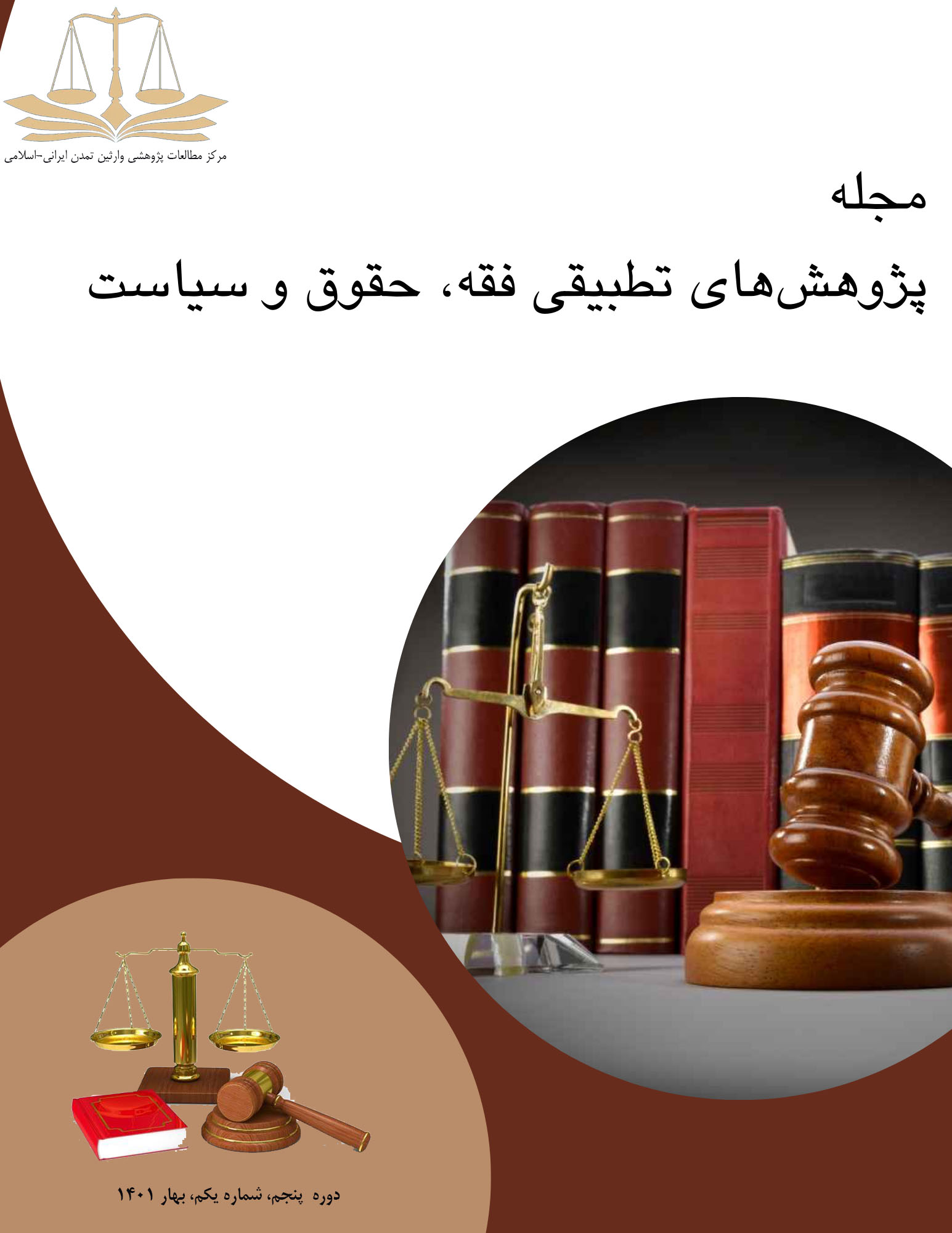
Examining the Relationship of the Time Element with Criminal Rulings (Qiṣāṣ and Diyāt) at the Stage of Enforcement of Judgment and Execution of Punishment in Imāmī Jurisprudence and Iranian Positive Law
DOI:
https://doi.org/10.61838/csjlp.658Keywords:
ratio, time, criminal sentences, retribution, blood money, aggravation and mitigation of punishmentAbstract
Criminal rulings, like other legal rulings, are contingent upon and conditioned by specific requirements and regulations. One of the constraints that is sometimes legislated as a cause or a condition of criminal rulings is the element of time. By means of an applied analysis of selected criminal rulings—specifically qiṣāṣ (retaliation) and diyāt (blood money)—this study seeks to answer the following question: Does the enforcement of criminal rulings (qiṣāṣ and diyāt) at the stage of executing the judgment and administering punishment bear any relationship with an element called “time”? And if such a relationship exists, what are the nature and characteristics of this relationship? The findings indicate that the element of time has an effective and influential relationship with criminal rulings (qiṣāṣ and diyāt) at the stage of enforcement of judgment and execution of punishment, and in certain circumstances leads to modification, lapse, mitigation, aggravation, postponement, and other alterations in these criminal rulings.
References
Alavi, A. (1994). Al-Qisas ala Daw' al-Quran wa al-Sunnah (Report of Sayyid Marashi's Research). Ayatollah Marashi Library.
Alishahi, A. (2015). Comparative Study of the Principle of Enforceability of Punishment in Jurisprudence, Iranian Criminal Law, and French Law. Jurisprudential Research(1), 147.
Allamah Hilli, H. b. Y. (1992). Qawa'id al-Ahkam (1st ed.). Islamic Publications Office.
Hurr Amili, M. b. H. (1993). Wasa'il al-Shia (2nd ed.). Al-Albayt Institute.
Ibn Abi al-Hadid, A. (1959). Sharh Nahj al-Balagha (1st ed.). Dar Ihya al-Kutub al-Arabiyya.
Khoei, A. (2002a). Misbah al-Usul (Vol. 48). Imam Khoei Revival Institute.
Khoei, A. (2002b). Retribution and Diyat (Vol. 42). Imam Khoei Revival Institute.
Khomeini, R. (1970). Tahrir al-Wasilah (2nd ed.). Matba'at al-Adab.
Madani Kashani, R. (1987). Kitab al-Diyat (1st ed.). Islamic Publications Office.
Madani Kashani, R. (1989). Kitab al-Qisas lil-Fuqaha wa al-Khawass (2nd ed.). Islamic Publications Office.
Majlisi, M. B. Hudud, Qisas, and Diyat. Islamic Works Publication Institute.
Mofid, M. (2003). Tafsir al-Quran al-Majid (1st ed.). Bustan-e Ketab.
Motahari, M. (2010). Collected Works (Vol. 21). Sadra Publications.
Rohani, M. (1999). Judiciary Referendums (Estefta'at).
Saanei, Y. (2010). Al-Ta'liqah ala Tahrir al-Wasilah (1st ed.). Institute for Compilation and Publication of Imam Khomeini's Works.
Sahib Jawahir, M. H. (1989). Jawahir al-Kalam fi Sharh Shara'i al-Islam (9th ed.). Dar al-Kutub al-Islamiyah.
Sha'rani, A. Translation of Tabsirat al-Muta'allimin (by Allamah Hilli). Islamiyah Publications.
Downloads
Publication Timeline
- Submitted
- Revised
- Accepted
Issue
Section
License
Copyright (c) 2025 محمد افشاری (نویسنده مسئول)

This work is licensed under a Creative Commons Attribution-NonCommercial 4.0 International License.