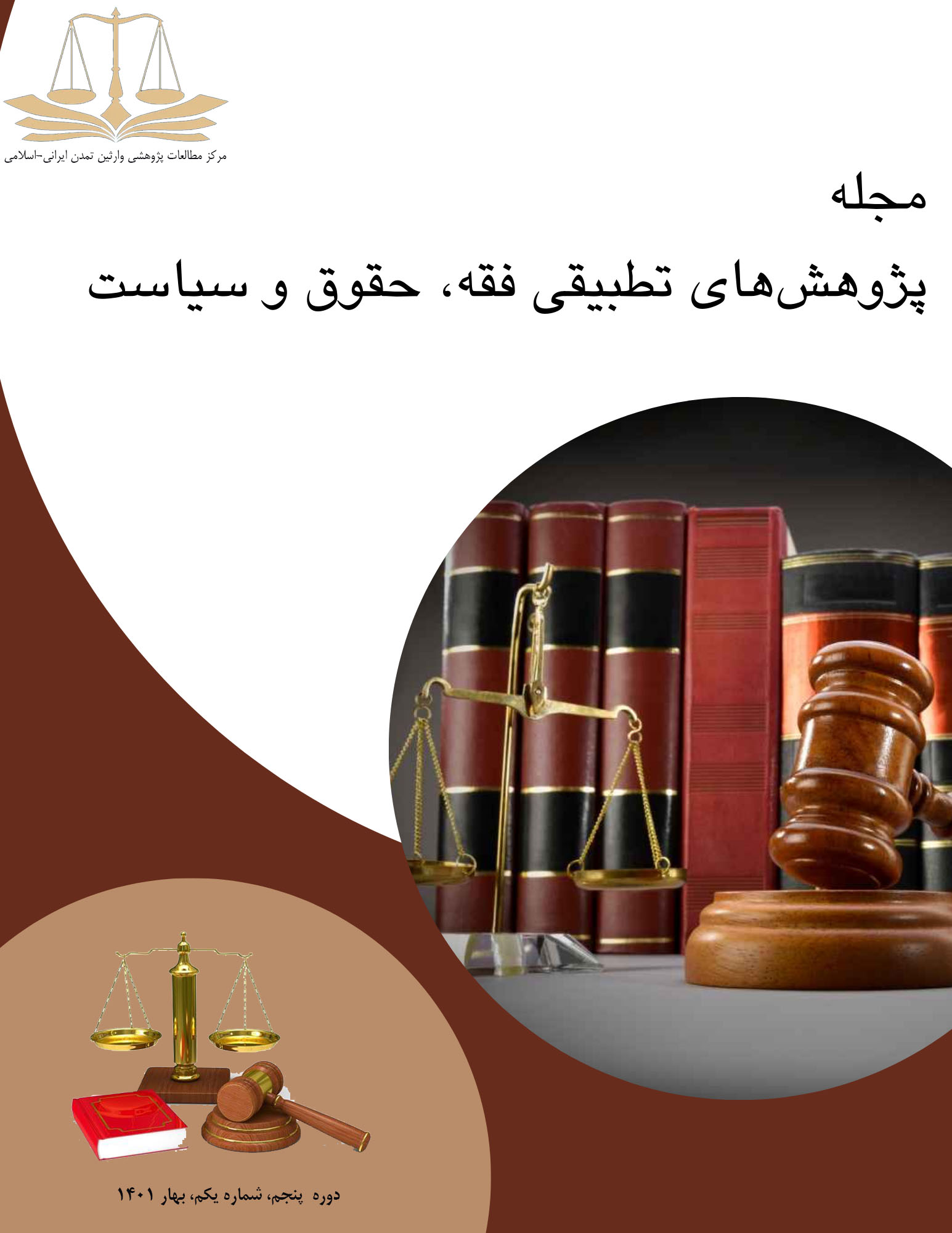
The Husband’s Qiwāmah and Its Impact on Coercion into Sexual Intercourse from the Perspective of Islamic Jurisprudence
Keywords:
Guardianship (qawwamiyyah), Right of Refusal (haqq al-habs), Consent, Sexual CompulsionAbstract
The intimate marital relationship naturally fulfills the sexual needs of both spouses and contributes to their tranquility and well-being. The importance of mutual consent and the absence of coercion in such relations constitutes a defining characteristic of a marital relationship that strengthens the family. Given that coercion sometimes occurs in marital relations, women generally suffer more serious harm as a consequence. The husband is regarded as having qiwāmah (marital authority and responsibility) over his wife; however, he must attain a sufficient level of personal and intellectual maturity to understand that qiwāmah does not justify coercion or domination. One of his responsibilities toward his wife is to create conditions conducive to tranquility and security within family life. Accordingly, he should seek to minimize coercion in all forms of marital relations, whether intimate or general, so that the family can serve as a secure environment for nurturing and personal development. From jurisprudential, legal, and psychological perspectives, principles and rights such as the prohibition of imposing undue hardship (ʿusr wa ḥaraj) on the wife and the wife’s right of retention (ḥaqq al-ḥabs), among others, restrict such coercion to some extent. Nevertheless, additional safeguards, including the legal regulation and criminalization of coercion by a husband in his relationship with his wife, are necessary to prevent the husband’s qiwāmah from becoming a basis for coercion in marital relations. This article employs a descriptive–analytical method and examines various dimensions and consequences of coercion in relations between spouses. An analysis of different jurisprudential sources, including both Imamī Shiʿi and Sunni jurisprudence, together with relevant legal grounds, can provide substantial arguments against coercion, establish the principle of non-coercion as a fundamental norm in marital relations, and render existing limitations more purposeful. Such an approach can contribute to achieving balance within the family, with the ultimate objective of reducing harm to the family.
References
Abdollahi, E. (2021). Examining the Relationship between Sexual Satisfaction and Mental Health in Married Elderly Women in Guilan. Journal of Guilan University of Medical Sciences, 30(1), 14-27.
Al-Amili, S. M. H. (2006). Al-Zubda al-Fiqhiyya fi Sharh al-Rawda al-Bahiyya (4th ed.). Dar al-Fiqh lil-Tiba'a wa al-Nashr.
Al-Araki, M. A. (1998). Kitab al-Nikah (1st ed.). Islamic Propagation Office.
Al-Bahrani, M. (2007). Fiqh al-Masarif wa al-Nuqud (1st ed.). Maktabat Fadak.
Al-Bahrani, Y. i. A. i. I. (1984). Al-Hada'iq al-Nadira fi Ahkam al-Itra al-Tahira (1st ed.). Islamic Publications Office, Society of Seminary Teachers of Qom.
Al-Bihbahani, S. A. (1984). Al-Fawa'id al-Aliyya: Al-Qawa'id al-Kulliyya (1st ed.). Dar al-Ilm Library.
Al-Hattab, a.-R. a. (1995). Mawahib al-Jalil (1st ed.). Dar al-Kutub al-Ilmiyya.
Al-Hilli, H. i. Y. (1992). Mukhtalaf al-Shi'a fi Ahkam al-Shari'a (2nd ed.). Islamic Publications Office.
Al-Hilli, H. i. Y. (1998). Qawa'id al-Ahkam (1st ed.). Mu'assasat al-Nashr al-Islami, Society of Seminary Teachers.
Al-Hurr al-Amili, M. i. a.-H. (1988). Wasa'il al-Shi'a (1st ed.). Mu'assasat Al al-Bayt.
Al-Husayni al-Milani, S. M. H. (1975). Muhadarat fi Fiqh al-Imamiyya (1st ed.). Ferdowsi University Press.
Al-Husayni al-Shirazi, S. M. (1998). Al-Fiqh: Al-Qanun (1st ed.). Markaz al-Rasul al-A'zam lil-Tahqiq wa al-Nashr.
Al-Kulayni, M. i. Y. q. (1986). Al-Kafi (Islamic Edition) (4th ed.). Dar al-Kutub al-Islamiyya.
Al-Musawi al-Amili, M. i. A. (1990). Nihayat al-Maram fi Sharh Mukhtasar Shara'i al-Islam (1st ed.). Islamic Publications Office, Society of Seminary Teachers of Qom.
Al-Muzani, I. i. Mukhtasar al-Muzani. Dar al-Ma'rifa lil-Tiba'a wa al-Nashr.
Al-Naraqi, M. A. i. M. M. (1996). Awa'id al-Ayyam fi Bayan Qawa'id al-Ahkam (1st ed.). Islamic Propagation Office of Qom Seminary.
Al-Shafi'i, M. i. I. (1982). Al-Umm (2nd ed.). Dar al-Fikr lil-Tiba'a wa al-Nashr.
Al-Sharif, a.-M. (1984). Rasa'il al-Sharif al-Murtada. Dar al-Qur'an al-Karim.
Al-Shirbini, M. i. A. (1957). Mughni al-Muhtaj. Dar Ihya' al-Turath al-Arabi.
Ansari Dezfuli, M. (1994). Kitab al-Makasib (al-Nikah) (1st ed.). World Congress Commemorating Shaykh al-Ansari.
Emami, S. H. (1961). Civil Law. Islamic Publications.
Fazel Movahedi Lankarani, M. (2000). Tafsil al-Shari'a fi Sharh Tahrir al-Wasila: Al-Nikah (1st ed.). Jurisprudence Center of the Imams.
Ibn Hazm, A. i. A. Al-Muhalla. Dar al-Jamil.
Ibn Idris, a.-H. (1989). Al-Sara'ir (2nd ed.). Mu'assasat al-Nashr al-Islami, Society of Seminary Teachers.
Kazemi, Z., & Ghasemi, G. (2020). Sexual Assault in Marital Relationships from Legal and Social Perspectives in Iran and England. Quarterly Journal of Private and Criminal Law Research(43), 53-88.
Mohaghegh Damad Yazdi, S. M. (1985). Principles of Islamic Jurisprudence (12th ed.). Organization for Researching and Composing University Textbooks in the Humanities (SAMT).
Mousavi Ardebili, S. A. (2006). Fiqh al-Hudud wa al-Ta'zirat (2nd ed.). Mu'assasat al-Nashr li-Jami'at al-Mufid.
Nobahar, R., & Hosseini, S. O. (2018). The Limits of Sexual Relations between Husband and Wife within the Framework of the Principle of Kind Treatment. Family Research Quarterly(53), 75-94.
Rahimi Pardanajani, T. (2016). Examining the Relationship between Personality Traits and Women's Sexual Satisfaction. Journal of Sabzevar University of Medical Sciences, 23(6), 826-835.
Safaei, S. H., & Emami, A. (2009). A Concise Treatise on Family Law (17th ed.). Mizan.
Sha'rani, A. a.-H. (1998). Tabsirat al-Muta'allimin fi Ahkam al-Din (5th ed.). Islamic Publications.
Sham'i, M. (2013). An Introduction to Criminalization and Decriminalization (1st ed.). Jangal.
Shubayri Zanjani, S. M. (1998). Kitab al-Nikah (1st ed.). Raypardaz Research Institute.
Tabatabaei Haeri, S. A. (1991). Riyad al-Masa'il (Old Edition) (1st ed.). Mu'assasat Al al-Bayt.
Tabatabaei Yazdi, S. M. K. (1988). Urwat al-Wuthqa fima Ta'umm bihi al-Balwa (2nd ed.). Mu'assasat al-A'lami lil-Matbu'at.
Downloads
Publication Timeline
- Submitted
- Revised
- Accepted
Issue
Section
License
Copyright (c) 2025 Somayeh Ebrahimi (Author); Ozra Entekhabian (Corresponding author); Abolhassan Soltani (Author)

This work is licensed under a Creative Commons Attribution-NonCommercial 4.0 International License.