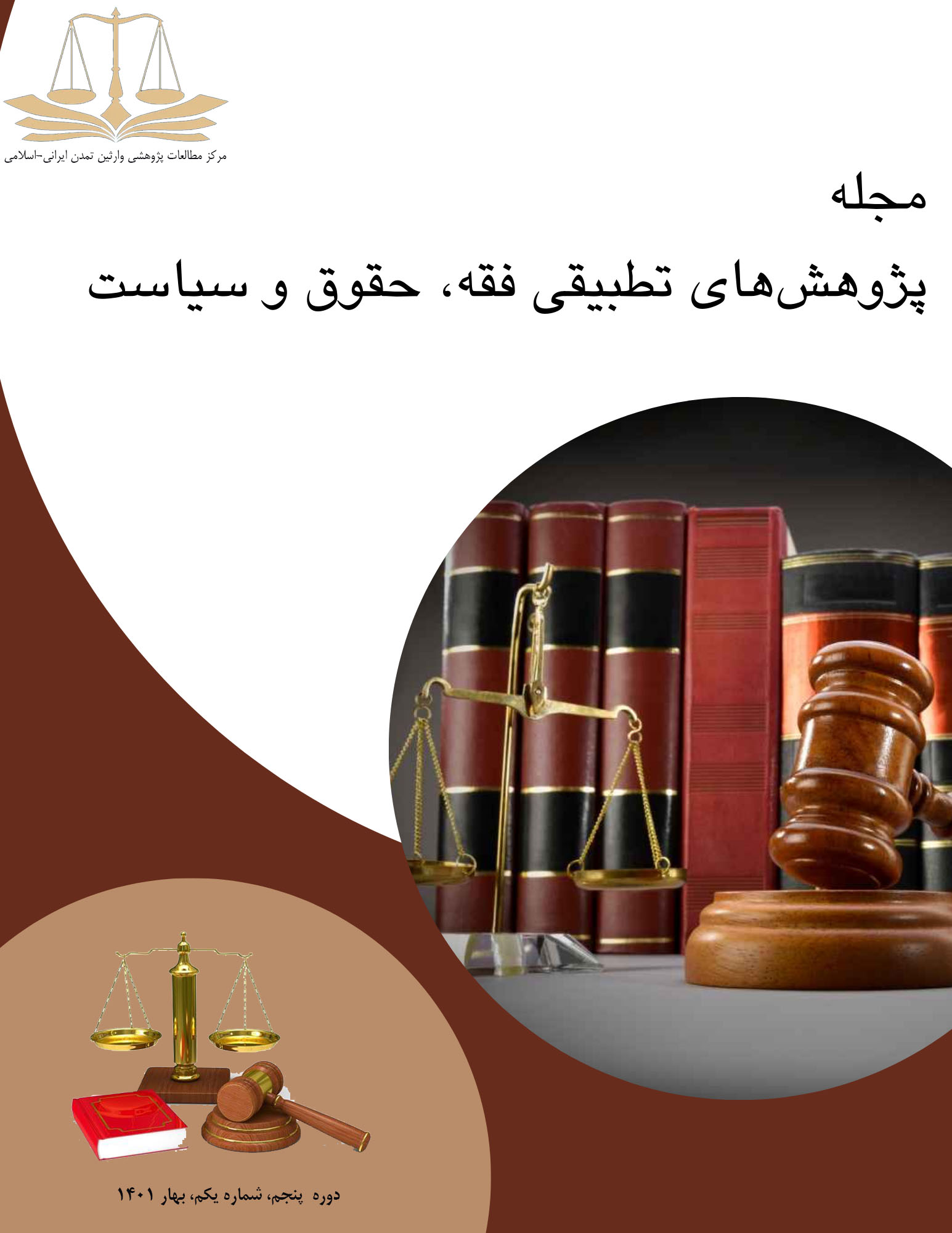
The Hearing Process in the Article 100 Commission of the Municipal Law in Light of the Principles of Fair Trial
DOI:
https://doi.org/10.61838/csjlp.421Keywords:
Principles of fair trial, quasi-judicial institutions, Commission of Article 100 of the Municipal Law, MunicipalityAbstract
One of the fundamental human rights is the right to a fair trial. This right, within the framework of procedural law, encompasses multiple principles that courts and judicial authorities are directly obliged, by virtue of statutory provisions, to observe and comply with. Many disputes between citizens and executive or governmental bodies are resolved in quasi-judicial institutions. One such authority is the Article 100 Commission under the Municipal Law. This body is subject to specific laws and regulations and has its own particular adjudication process. The present study, conducted using a descriptive–analytical method and based on library research tools, aims to analyze the principles of fair trial within the framework of the aforementioned commission. The findings of this study indicate that the Article 100 Commission of the Municipal Law is far from meeting the optimal standards in observing the principles of fair trial, and one of the most significant challenges in this regard is the legislator’s silence and the existence of a regulatory gap. Consequently, with respect to the Article 100 Commission of the Municipal Law, there is an urgent need to draft and enact new laws and regulations to implement and guarantee the principles of fair trial.
References
Abdipour, A. (2019). The Role of the Administrative Court of Justice on the Development of Fair Trial in Quasi-Judicial Labor Authorities Islamic Azad University, Law Department]. Safadasht.
Afshari, F. (2021). Judicial Supervision of Administrative Official's Ruling Error in Iranian Administrative Law with a Comparative Approach to the Legal Systems of England and France. Comparative Law Bi-Quarterly, 8(1). https://law.mofidu.ac.ir/article_242120.html?lang=en
Arefnia, O. (2016). Critique and study of the role of lawyers in the rule of law from the perspective of Lon Fuller. Law School, 103(1).
Areh-Kashan, A. (2016). Analysis of the principles of civil liability and the formal and substantive conditions for compensation for damages resulting from violations of quasi-judicial municipal commissions' decisions University of Tehran]. Tehran. https://ut.ac.ir/fa/thesis/27559/
Fallahzadeh, A. (2013). The Right to Be Heard in Administrative Law in England and Iran. Journal of Public Law Research, 41(1). https://qjpl.atu.ac.ir/article_161.html
Ghamami, M., & Mohseni, H. (2018). Transnational Civil Procedure. Publishing Joint Stock Company.
Ghasemi, S., Farzaneh, A., & Ghasemi, A. (2019). Quasi-judicial authorities in municipalities and their challenges. Quarterly Journal of Legal Studies, 3(29). https://jlawst.ir/article-1-904-en.html
Gholipour, H., Ahmadi, S. M., & Jafari Matte Kolaei, M. H. (2010). Studying the Principle of Correspondence in Judicial Proceedings and International Commercial Arbitration. Quarterly Journal of Islamic Jurisprudence and Law Research, 37(1). https://ensani.ir/fa/article/530285/
Hadavand, M., & AghaeiToq, M. (2016). Special Administrative Courts in the Light of the Principles and Procedures of Fair Trial (Iranian Law and Comparative Study). Khorsandi.
Hadavand, M., & YazdaniZenouz, H. (2011). Legal System for Handling Municipal Fee Disputes (Commission of Article 77 of the Municipal Law). Jangal, Javedaneh.
Heydari, S. (2017). The Principle of Correspondence in Administrative Proceedings with Emphasis on the Proceedings of the Administrative Court of Justice. Journal of Legal Studies of Shiraz University, 9(2). https://jls.shirazu.ac.ir/article_4187.html?lang=en
Mahdavi, D. (2014). Criminal Jurisdiction in Iranian Law (Fair Trial in Non-Judicial Cases). Mizan.
MarkazMalmiri, A. (2015). Rule of Law: Concepts, Principles and Perceptions. Islamic Consultative Assembly, Research Center.
Mohseni, H. (2019). Managing the Civil Litigation Process Based on Cooperation and Within the Framework of the Principles of Litigation. Publication Joint Stock Company.
Nejabatkhah, M., Afshari, F., & Mousavizadeh, S. S. (2017). Pathology of the structure and competences of specialized administrative authorities in Iranian administrative law. Bi-Quarterly Journal of Judicial Law Perspectives(77 and 78). https://jlviews2.ujsas.ac.ir/browse.php?a_id=851&sid=1&slc_lang=en
Patfat, A., & Markazmalmiri, A. (2017). The concept and scope of general principles of administrative law; possibilities and how to invoke it in judicial proceedings. Judiciary, Deputy for Social Affairs and Crime Prevention, Press and Publications Center.
Rafiei, M., Abdolhayan, O., Markazmalmirif, A., & Soltani, M. (2016). Typology of lawsuits and decisions of the branches of the Administrative Justice Court (from the beginning of October 2013 to the end of March 2013). Judiciary Press Center.
Sadeghi, M. (2018). Dispute Resolution System in Municipalities Kharazmi University, International Campus]. Tehran.
Shabani, Y. (2017). The nature of quasi-judicial authorities in the opinions of the General Board of the Administrative Court of Justice. Quarterly of Public Law Essays, 1(3). https://ensani.ir/fa/article/378190/
Shams, A. (2002). The Principle of Correspondence. Journal of Legal Research, 35(1). https://ensani.ir/fa/article/7154/
Downloads
Publication Timeline
- Submitted
- Revised
- Accepted
Issue
Section
License
Copyright (c) 2025 Musa Alipour Zenozi (Author); Yaser Roustaei Hosseinabadi (Corresponding author); Ali Pourghasab Amiri, Ahmadreza Behniafar (Author)

This work is licensed under a Creative Commons Attribution-NonCommercial 4.0 International License.