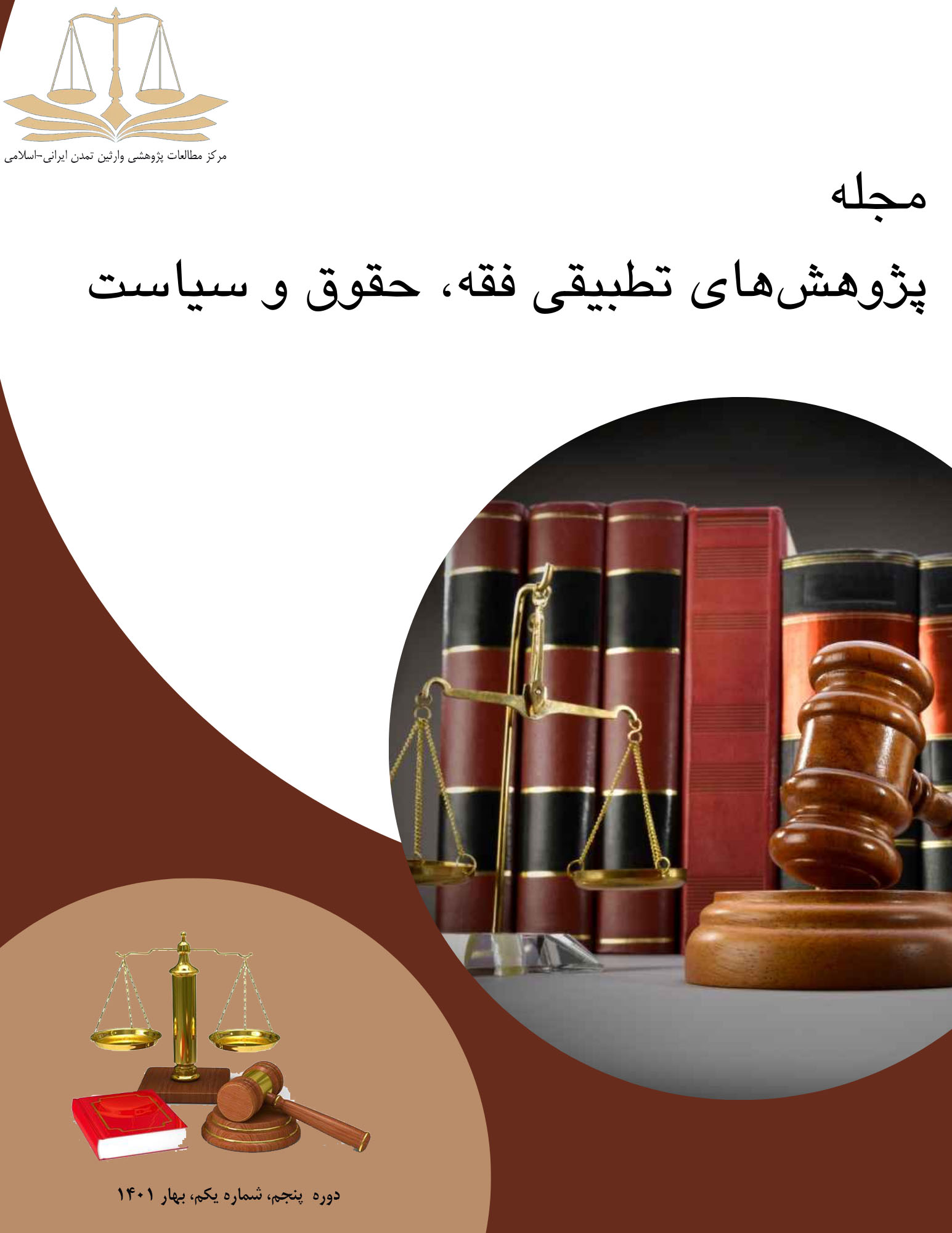
Recovery of Obtainable Benefits Damages in the 2013 Criminal Procedure Code and Iranian Judicial Practice with a View to English Law
Keywords:
loss and damage, crime, damages, compensation, prospective profitsAbstract
According to the principles of Islamic law, all harms and injuries inflicted upon a person’s dignity, body, and psyche must be remedied through compensation. Damage may be material or non-material (moral). As a result of such harm, a benefit may be lost, which is referred to as “obtainable benefits.” Under the law, only those damages that arise directly and without intermediary from the commission of a crime are recoverable. Only the loss of profit that is considered obtainable is compensable, whereas non-obtainable loss of profit is not subject to recovery. The boundary between loss of profit and obtainable benefits is highly subtle, to the extent that some scholars consider them identical. With respect to the jurisprudential and legal foundations of compensating damages for obtainable benefits, principles such as causation, the rule of no harm (la darar), and destruction (itlaf) are applicable. According to Note 2 of Article 14 of the Iranian Criminal Procedure Code enacted in 2013, the recovery of obtainable benefits is permissible in cases of bodily harm. This position has been accepted by many jurists and Islamic legal scholars. However, in English law, it must be noted that there is no fundamental distinction between civil and criminal damages; in both cases, the injured party is restored, through tort claims, to the position prior to the commission of the wrongful act, and the perpetrator is held liable for compensation. In English law, considering the principles of damage and harmful conduct, and in the presence of multiple causes, causation is determined based on the degree of fault under theories such as contributory negligence, and claims are adjudicated accordingly. In light of the foregoing, it appears that Iranian and English legal systems differ significantly in this regard.
References
Akbari, M. J., & Hashemi, S. H. (2016). Jurisprudential and Principles-Based Studies. Scientific Research Quarterly of Jurisprudential and Principles-Based Studies, 2(3).
Akhoundi, M. (2018). Criminal Procedure (39th ed.). Mizan Publications.
Al-Amili, Z. a.-D. i. A. i. A., Amini, A., & Ayati, S. M. R. (2019). Tahrir al-Rawdah fi Sharh al-Lumah (15th ed.). SAMT Publications.
Amid Zanjani, A. (2010). Causes of Liability (2nd ed.).
Arabian, B. (2014). Damages Arising from Crime in Iranian and English Law Islamic Azad University, Shahroud Branch].
Ashouri, M. (2019). Criminal Procedure (36th ed.). SAMT Publications.
Bahsani, A. F. (2021). Punishment in Islamic Jurisprudence. Dar al-Sharq.
Bashkouh, M. (2012). The Importance of Damages for Delay in Payment of Cash in Iranian and English Law. Encyclopedia of Law and Politics(18).
Cohen, T., & Smith, S. K. (2004). Civil Trial Cases and Verdicts in Large Counties (Bureau of Justice Statistics Bulletin, Issue. http://bjs.ojp.usdoj.gov/content/pub/pdf/ctcvlc01.pdf
Golestani, A. (2018). Analysis of Claims for Damages Arising from Crime in Judicial Practice Islamic Azad University, Damavand Branch].
Hashmdar. (2016). Judiciary Website of the Islamic Republic of Iran. http://iran505.com
Holden, K., & Smock, P. J. (2004). The Economic Cost of Marital Dissolution: Why Do Women Bear a Disproportionate Cost.
Khaleghi, A. (2017). Criminal Procedure (35th ed.). Shahr-e Danesh Institute for Legal Studies and Research.
Khodadad, M., & Elahian, M. (2017). Obtainable Benefits and the Truth of Loss. Journal of Social Sciences Studies, 3(1).
Marashi, M. H. (1991). Blood Money and Damages Arising from Crime. Judicial and Legal Journal of the Ministry of Justice(1).
Mojtahedi, Y. (2007). A Discussion on Blood Money and Indemnity. Payam-e Amouzesh, 5(25).
Pearce, D., & Halson, R. (2007). Damages for Breach of Contract: Compensation, Restitution, and Vindication. Oxford Journal of Legal Studies.
Rahmdel, M. (2015). Criminal Procedure (2nd ed., Vol. 1). Dadgostar Publications.
Ramezanian Siahkaroudi, A. (2014). Concurrence of Cause and Direct Actor in the New Islamic Penal Code.
Ruff, A. (2016). Nutcases: Contract Law (4th ed.). Sweet and Maxwell.
Sadeghizadeh, A., & Moghadam, A. (2018). Civil Liability Arising from Loss of Obtainable Benefits. Comparative Iranian and International Legal Research, 11(40).
Saket, M. H. (2016). Personality and Legal Capacity in Civil Law. Author.
Salimi, E. (2013). Comparative Study of the Effects and Rules of Prescribed and Non-Prescribed Discretionary Punishments in Islamic Law University of Isfahan, Faculty of Administrative Sciences and Economics].
Sanaei, S. (2016). Obtainable Benefits and Moral Damages in Prescribed Discretionary Punishments in Islamic Law Islamic Azad University, Science and Research Branch].
Tafaghodi Zare, S. (2016). Damages Resulting from the Decrease in the Value of Money in Iranian and English Law. International Legal Research, 9(33).
Wasiti Zabidi, S. M. (1993). Taj al-Arus min Jawahir al-Qamus (Vol. 20). Dar al-Fikr.
Zamanzadeh, S. (2017). Private Claim Arising from Crime in the Criminal Procedure Code and Judicial Practice of 2013: Claiming Damages Arising from Crime Islamic Azad University, Naragh Branch].
Downloads
Publication Timeline
- Submitted
- Revised
- Accepted
Issue
Section
License
Copyright (c) 2026 Gholamhossein Eghbali (Author); Kumars Kalantari (Corresponding author); Mohammad Behroziyeh (Author)

This work is licensed under a Creative Commons Attribution-NonCommercial 4.0 International License.