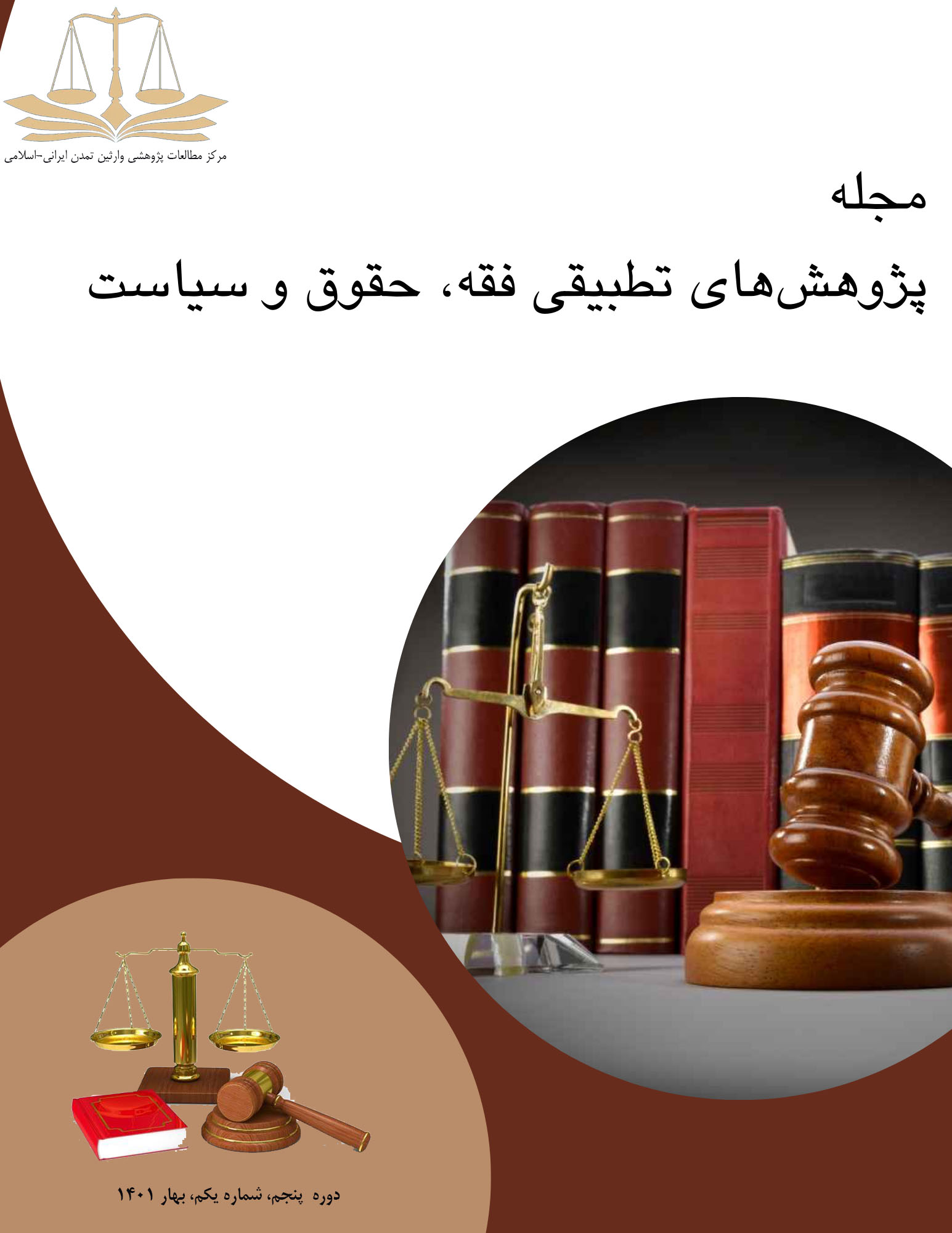
An Examination and Analysis of Disturbing Public Opinion under the Press Law: An Approach Based on the Non-Criminalization of Disturbing Public Opinion
Keywords:
Public unrest, freedom of expression, press, mediaAbstract
Disturbing public opinion refers to any act, conduct, or report that disrupts individuals’ mental and psychological tranquility and immerses them in anxiety and apprehension. With regard to disturbing public opinion through the press, two points must be emphasized. On the one hand, the press functions as the vigilant eyes of society, and media attention to a particular issue may prompt public officials to reconsider their conduct and, where shortcomings exist, to take corrective action in light of journalistic reports and criticism. On the other hand, one of the most common accusations brought against media and press professionals in Iran is the offense of disseminating false information with the intent to disturb public opinion. Unfortunately, judicial practice often adopts inconsistent approaches when determining whether particular conduct falls within the relevant statutory provision and whether the elements of this offense have been established. Courts have offered multiple interpretations of the concept of disturbing public opinion, while no precise definition has been provided in statutory texts. Disturbing public opinion is also one of the legal concepts that should not be interpreted broadly. Accordingly, this article seeks to provide a precise definition of disturbing public opinion and to examine and analyze its constituent elements. It subsequently evaluates, from the perspective of press law, the specific criminal intent required for the offense of disseminating false information, namely the intent to disturb public opinion. The article then addresses the following hypotheses: (1) the absence of a precise definition of disturbing public opinion has made it possible for this legal characterization to be interpreted broadly, subjectively, and, at times, incorrectly; and (2) one of the most effective means of preventing forms of disturbance to public opinion that are harmful to society is the enactment of an explicit statutory provision and its logical interpretation. Finally, the article discusses whether disturbing public opinion should itself be regarded as a criminal offense.
References
Aghaei Jannat Makan, H. (2013). General criminal law: New penology (1st ed., Vol. 3). Jangal Publications.
Aminpour, M. (2016). General Penal Code and decisions of the Supreme Court (1st ed.).
Ashouri, M. (2021). Criminal procedure (14th ed., Vol. 1). SAMT Publications.
Azarbaijani, V. (2020). Disturbance of public opinion and public officials and its criminal enforcement guarantees Islamic Azad University, Tehran Central Branch].
Bahrani, S., & Alipouran, Z. (2023). The role of media in intergenerational connection (Vol. 2). Institute for Humanities and Social Studies, Academic Center for Education, Culture and Research.
Bell, D. (2022). An introduction to cybercultures. Jame'eh-Shenasan Publications.
Elahimanesh, M. R., & Sedrehneshin, A. (2024). Annotated Cybercrimes Law (2nd ed.). Majd Publications.
Elham, G., & Borhani, M. (2014). General criminal law (2nd ed., Vol. 2). Mizan Publications.
Habibzadeh, M. (2018). The legality regime in criminal law. Judiciary Law Journal(23).
Jafari Langroudi, M. J. (2017). Legal terminology (15th ed.). Ganj-e Danesh Library.
Jalali Farahani, A. H. (2023). An introduction to criminal procedure for cybercrimes (1st ed.). Khorsandi Publications.
Pad, A. (2014). Special criminal law (Vol. 1). University of Tehran Press.
Downloads
Publication Timeline
- Submitted
- Revised
- Accepted
Issue
Section
License
Copyright (c) 2025 Zahra Dehghani Mohammadabadi (Author); Seyed Mohsen Mirhosaini (Corresponding author); Saeed Daryaee , Shadi Zabet (Author)

This work is licensed under a Creative Commons Attribution-NonCommercial 4.0 International License.