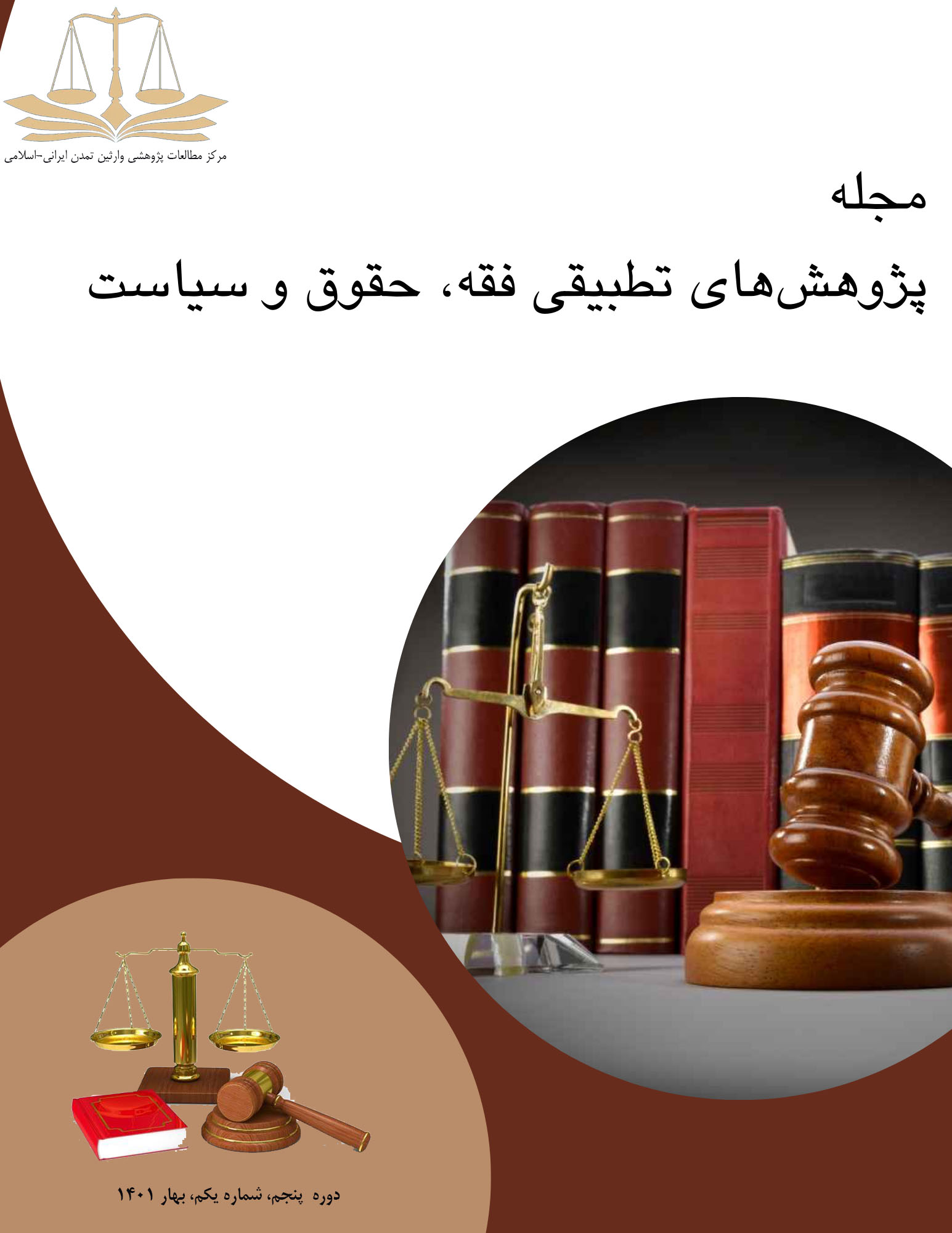
The Jurisprudential and Legal Foundations of the State's Civil Liability in Regard to Filtering (Censorship) Social Media Networks
DOI:
https://doi.org/10.61838/csjlp.6.4.14Keywords:
Refinement of social networks, harmless rule, human dignity, guilt, risk theory, right guarantee theoryAbstract
In today's world, the filtering (censorship) of social media networks is employed by governments as one of the tools for controlling and managing the virtual space. However, this action can lead to serious challenges regarding the civil liability of the state and the violation of citizens' rights. This article examines the jurisprudential and legal foundations of the state's civil liability in regard to filtering social media networks. In the jurisprudential section, principles such as the rule of Lā ẓarar (no harm), respect for human dignity, the sanctity of a believer's privacy, the generality of consent, and the rule of Tasbīb (causation) are discussed, and their role in the state's accountability for the damages caused by filtering is clarified. These principles emphasize the necessity of safeguarding individual rights, privacy, and preventing unjust harm to citizens. In the legal section, theories of liability based on fault, the theory of risk, and the theory of guaranteed rights are analyzed. According to these theories, the state will be liable for compensating damages caused by violating fundamental rights of users, such as freedom of speech and access to information. The research methodology of this study is descriptive-analytical, and the findings indicate that the state's civil liability in regard to filtering, both from a jurisprudential and legal perspective, is mandatory. Any limitation on access to the virtual space should be carried out with respect to the fundamental rights of citizens and with consideration of its legal and social consequences.
Downloads
Publication Timeline
- Submitted
- Revised
- Accepted
Issue
Section
License
Copyright (c) 2024 Omid Mohammadi Nia (Author); Hadi Karamati Moez (Corresponding author)

This work is licensed under a Creative Commons Attribution-NonCommercial-ShareAlike 4.0 International License.